Descripción
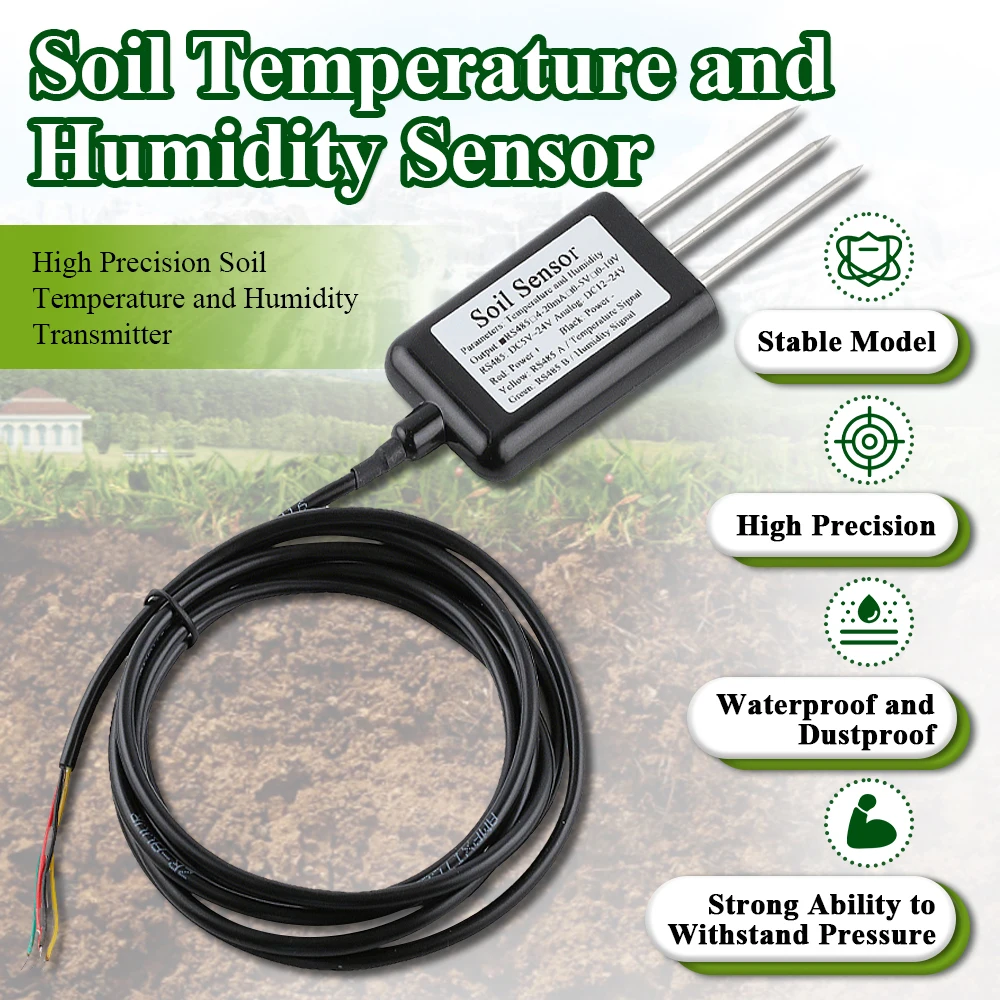
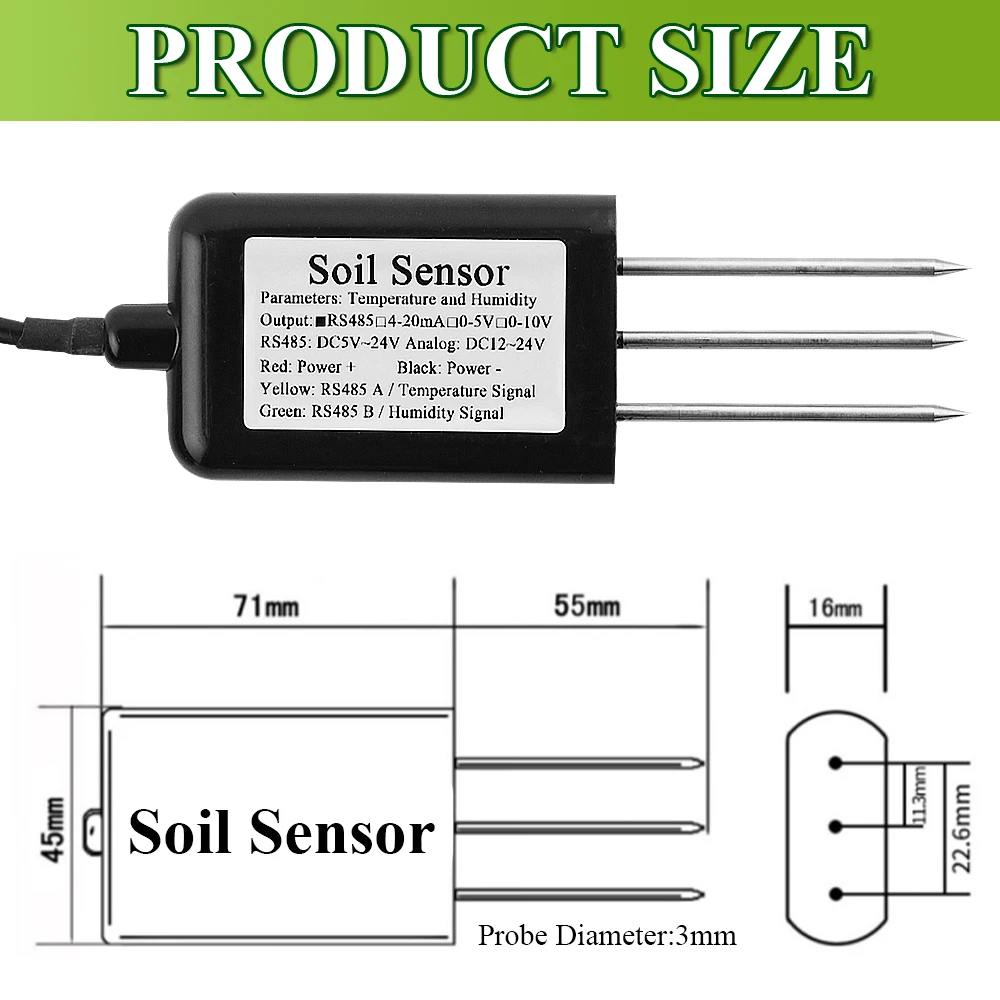
Soil Temperature Humidity Sensor Probe RS485 Output 0-5V 0-10V 4-20mA Analog Soil Moisture Detector Sensors IP68 Protection
Introduction
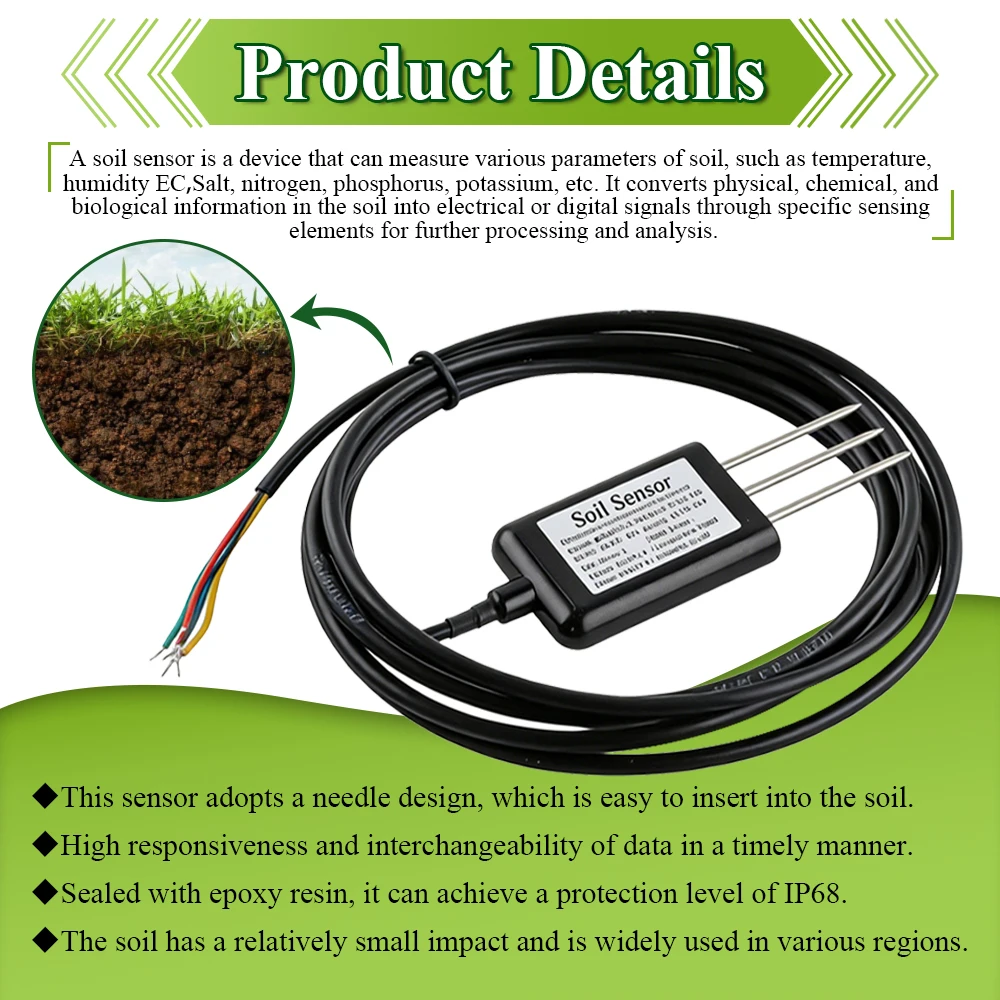
A soil sensor is a device capable of measuring various parameters of soil, such as temperature, humidity, EC, salinity, nitrogen, phosphorus, potassium, etc. It converts the physical, chemical and biological information in the soil into electrical or digital signals through specific sensing elements for further processing and analysis. In modern agriculture, soil sensor technology is mainly used to monitor various parameters of the soil, providing data support for precise planting and intelligent management. Through soil sensors, farmers can promptly understand the condition of the soil, adjust management measures such as fertilization and irrigation, and improve the growth quality and yield of crops. Meanwhile, the application of this technology also helps to reduce production costs, protect the ecological environment and achieve sustainable agricultural development. The soil temperature part is collected by NTC resistance and converted by a 12-bit ADC. The soil moisture part is based on the FDR(Frequency Domain Reflection) principle. By measuring the dielectric constant of the soil, it can directly and stably reflect the true moisture content of various soils and measure the volume percentage of soil moisture. The soil electrical conductivity part is based on complementary PWM output as the signal excitation source, and the resistance value is collected by bridge type. Finally, the temperature is added to compensate the conductivity signal to 25℃ and then output it as the salt content signal.
Product features
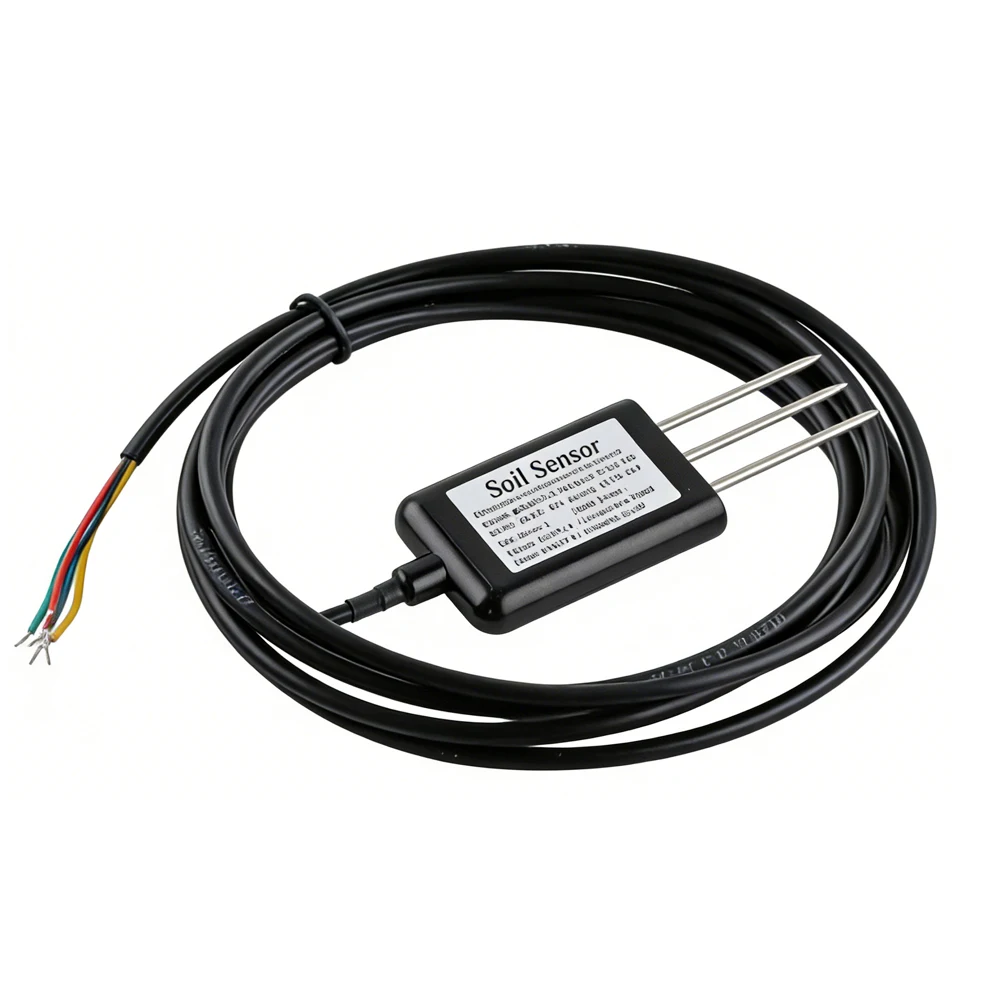
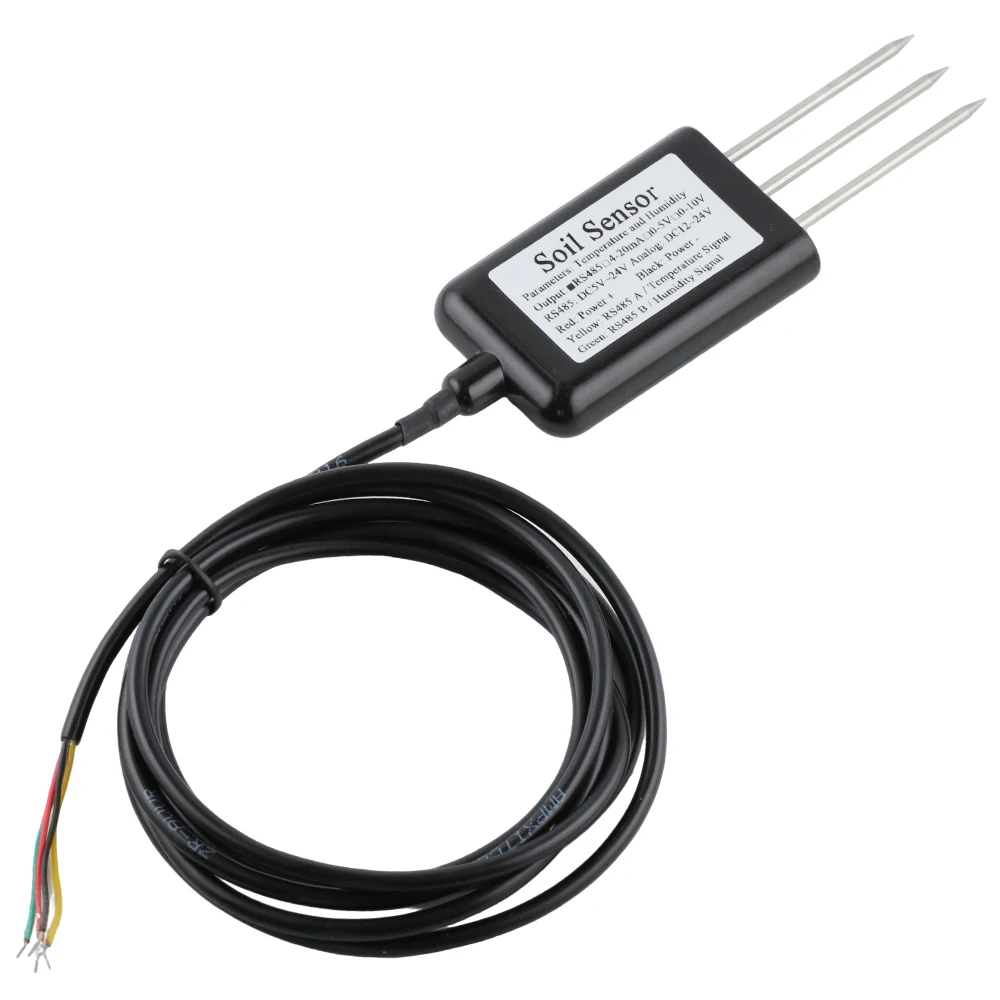
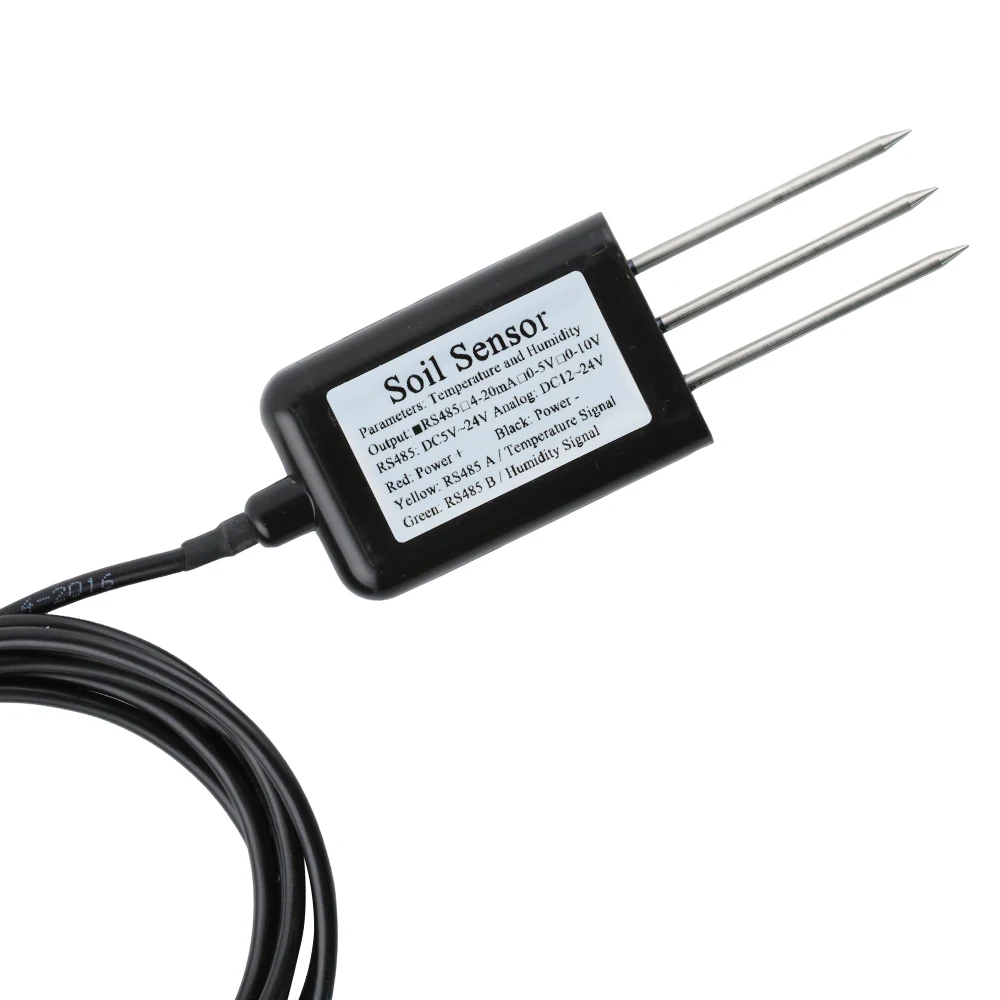
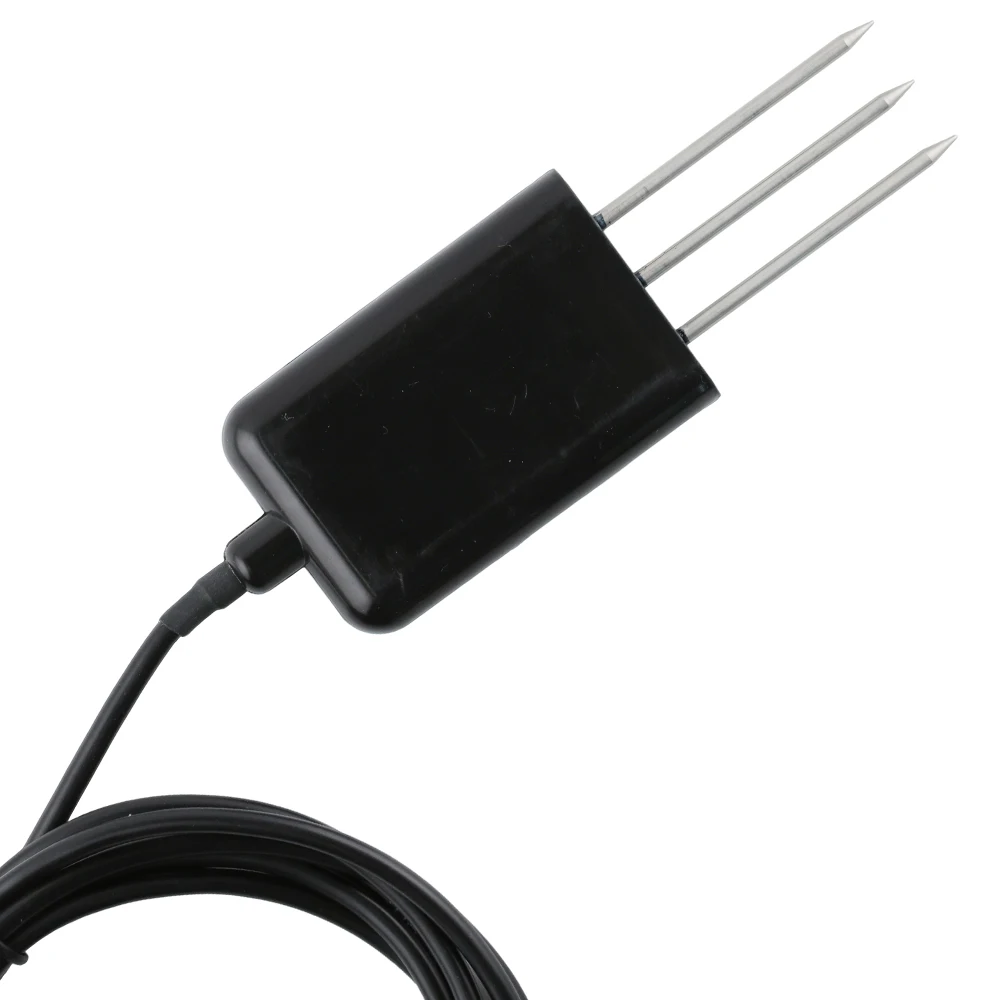
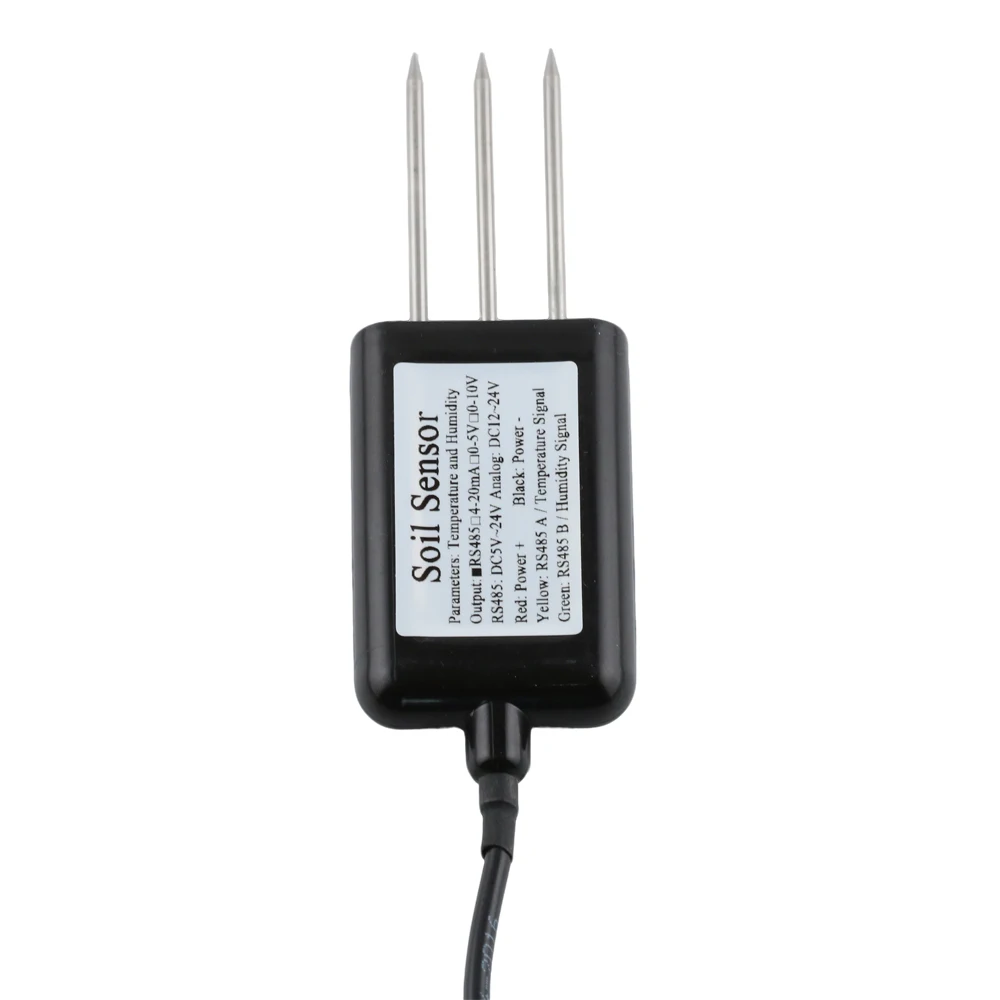
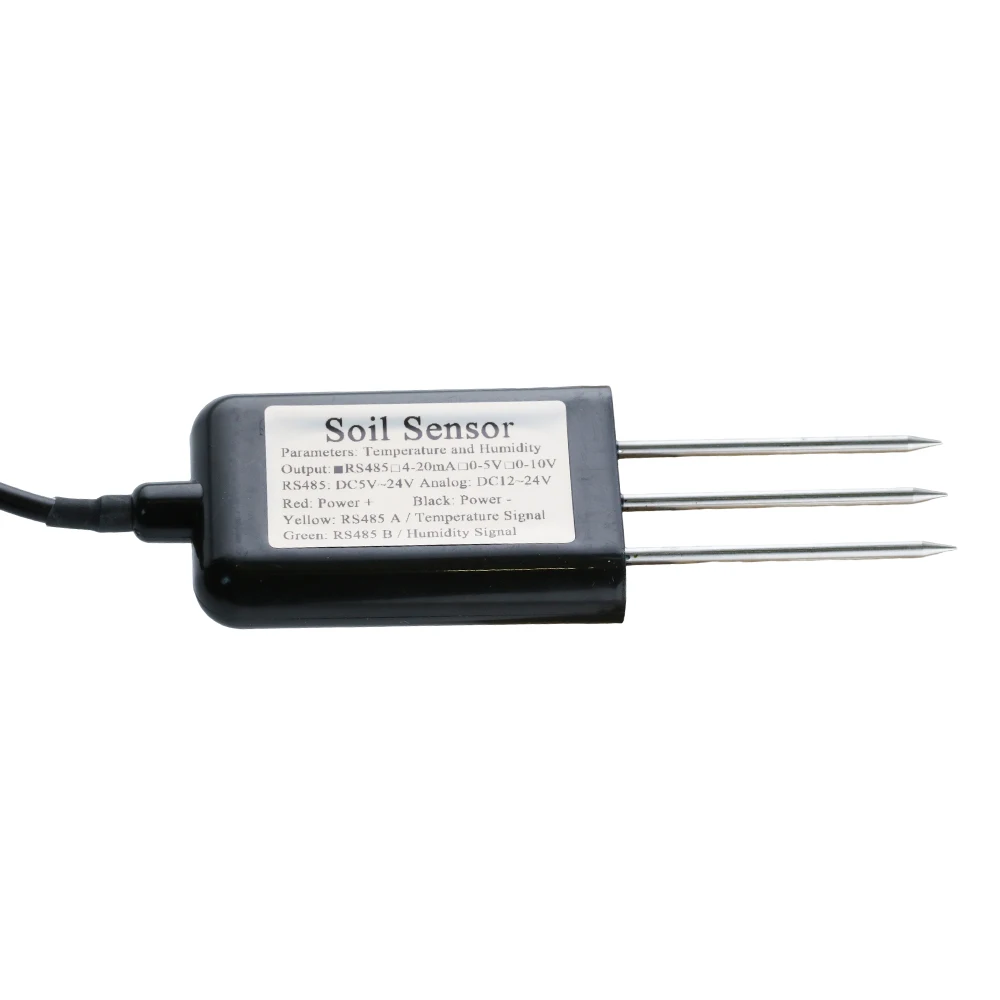
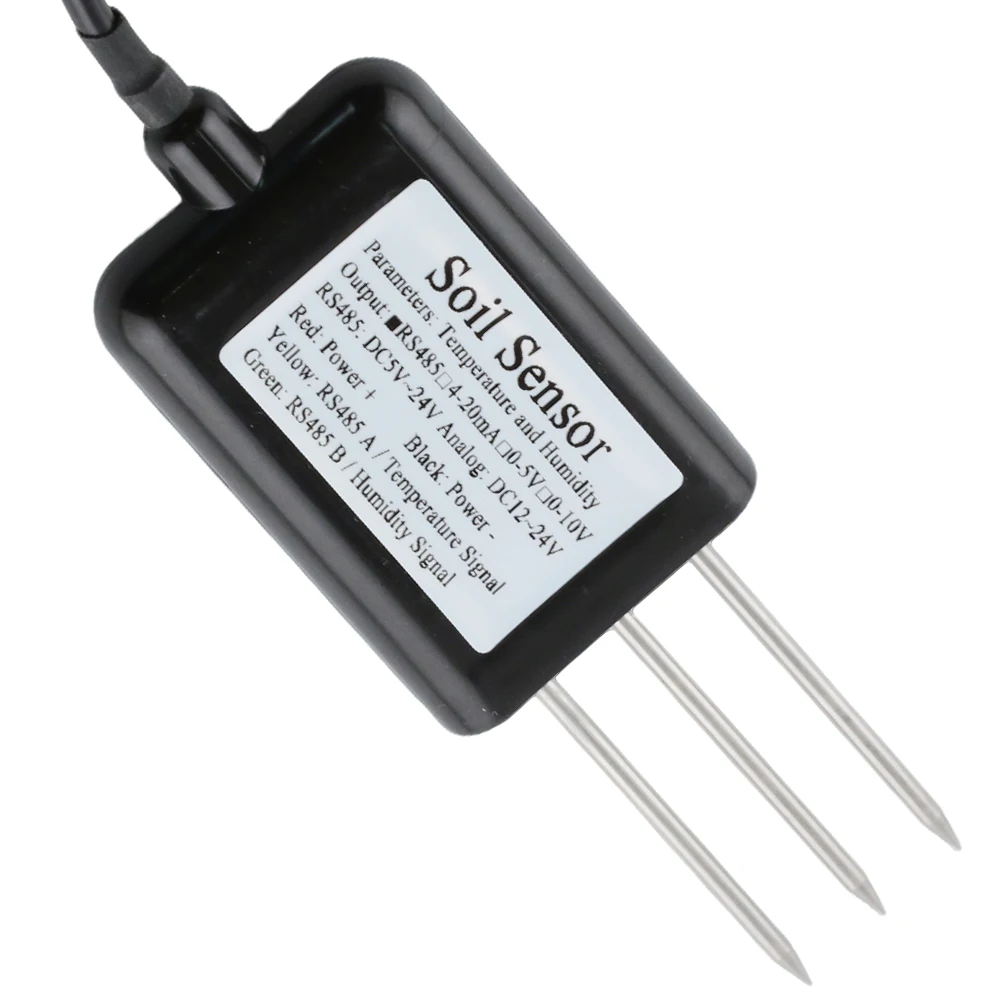
This sensor adopts a needle-type design, which is convenient for insertion into the soil.
(2) The data has high timely response and good interchangeability.
(3) It adopts epoxy resin sealing and can achieve a protection level of IP68.
(4) It has a relatively small impact on soil quality and is widely applied in various regions.
(5) Electrical and magnetic isolation is adopted in multiple places to ensure product performance and normal operation.
(6) Standard Modbus-RTU protocol
Scope of use
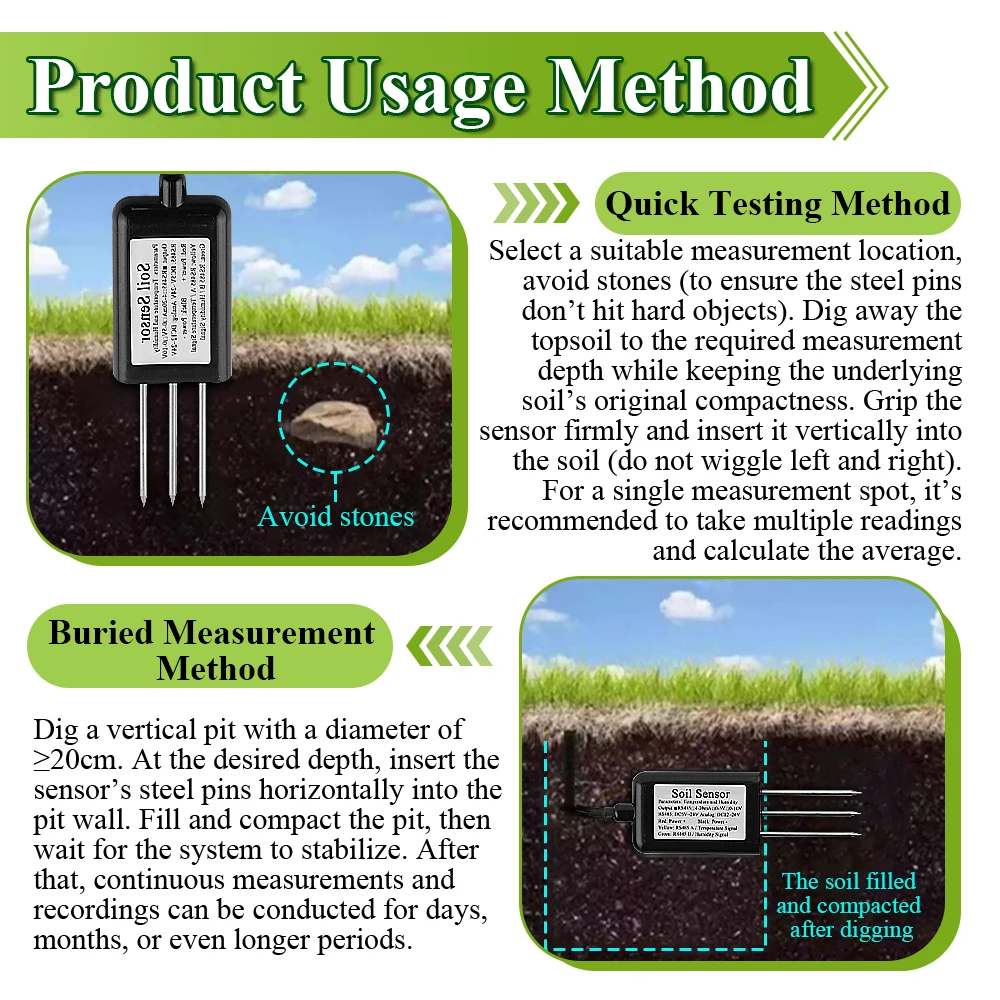
It is applicable to fields such as water-saving agricultural irrigation, meteorological monitoring, environmental monitoring, greenhouse sheds, flower and vegetable cultivation, grassland pastures, soil rapid testing, plant cultivation, and scientific experiments, where soil temperature and humidity, electrical conductivity, soil pH, and soil nitrogen, phosphorus and potassium need to be measured.
Product parameters
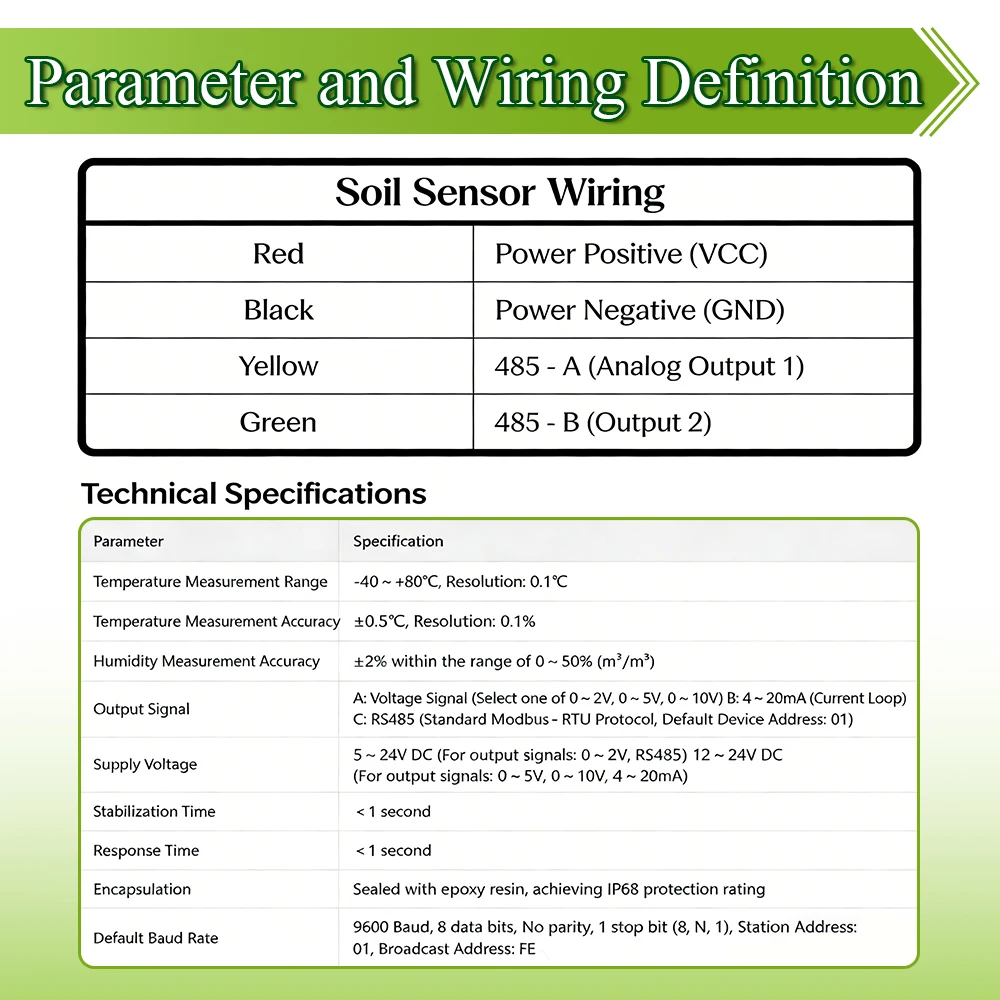
Temperature measurement range: -40 to +80℃, resolution 0.1℃
Temperature measurement accuracy: ±0.5℃, resolution 0.1%
Humidity measurement range: 0 to 100%(m ³ /m ³)
Humidity measurement accuracy: ±2% within the range of 0 to 50% (m ³ /m ³)
Output signal
A: Voltage signal (choose one of 0 ~ 2V, 0 ~ 5V, 0 ~ 10V)
B: 4 ~ 20mA (current loop)
C: RS485 (Standard Modbus-RTU protocol, default device address: 01)
Supply voltage
5 ~ 24V DC (when the output signal is 0 ~ 2V, RS485)
12 ~ 24V DC (when the output signal is 0 ~ 5V, 0 ~ 10V, 4 ~ 20mA)
Stabilization time: < 1 second
Response time: < 1 second
Encapsulation: Sealed with epoxy resin, it can achieve a protection level of IP68
Default Baud rate: 9600 Baud, 8, N, 1, station number 01, broadcast address FE